Blog
»
{{catList[157].label}}
» 5 reasons to visit Bedar
5 reasons to visit Bedar

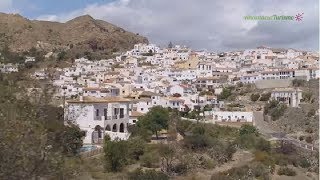
Bedar is located at an altitude of 404 meters at the foot of the Sierra de los Filabres. It will leave you with indelible memories thanks to the impressive landscapes that surround it.
We present our five reasons to visit Bedar.


Mining in Bedar dates back to Arab times (1525), although it reached its peak in 1888, being already in Christian hands. The mines closed permanently in 1970, leaving us with this important industrial legacy.
The Bedar Mining Trail (SL-A 77) stands out before all. Along it, one can travel for almost 8 kilometres, which takes about two-and-a-half hours. There is a large number of highly interesting mining facilities.
We present our five reasons to visit Bedar.
Muslim past
Bedar was founded in the Middle Ages, in the year 1480, during the time of Muslim domination of the region. This Muslim past is present in Bedar, with its small, angular, and twisted streets, which give this Almeria town a special charm.Church of Saint Mary
It was ordered to be built, around 1558-1570, by Bishop Antonio Carrionero. On the door of the Church appears the shield of the bishop.
It is a church with the appearance of a fortress, designed in this way to withstand possible attacks during a time when invasions and attacks were common.
The structure of the bell tower stands out above the houses of the town, which is why it draws attention long before one reaches it.
It is a church with the appearance of a fortress, designed in this way to withstand possible attacks during a time when invasions and attacks were common.
The structure of the bell tower stands out above the houses of the town, which is why it draws attention long before one reaches it.
Temprana Fountain
It is not the only fountain in Bedar, but it is the most important one, thanks to its location in the heart of the town, next to the public laundry. During Muslim times, the source was known as "Albaquira Alfaguara".Mining routes
One of the biggest tourist attractions that Bedar offers is its mining past, which can be enjoyed through the different routes that have been designed to get to know this rich industrial past in depth.Mining in Bedar dates back to Arab times (1525), although it reached its peak in 1888, being already in Christian hands. The mines closed permanently in 1970, leaving us with this important industrial legacy.
The Bedar Mining Trail (SL-A 77) stands out before all. Along it, one can travel for almost 8 kilometres, which takes about two-and-a-half hours. There is a large number of highly interesting mining facilities.
Gastronomy
Despite being a small town, Bedar is known for the quality of its cuisine, with highlights including its wheat stews, the “ajo colorao”, the “caldo remojón”, the “migas”, the “gurullos” with partridge or snails, the porridge, the “olla de matanza”, the snails in sauce, the “pelotas”, and an endless list of traditional dishes from the Levante of Almeria.Activities in the province of Almeria


Share Article
More Articles


