Blog
»
{{catList[30].label}}
» Rodalquilar
Rodalquilar

Nestled in the centre of the Cabo de Gata-Nijar Natural Park is Rodalquilar, a town with dry summers and beautiful springs decorated with flowers.
The tranquillity of its streets is conducive to relaxing while contemplating the perfect fusion of the classic architectural style of the area, of houses with white walls, with modern constructions that are part of the development of the area.
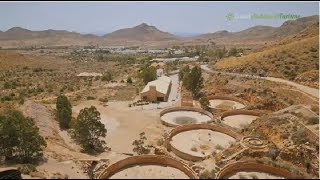


 Federico Garcia Lorca, in his work Bodas de Sangre, immortalized the Cortijo del Fraile, located just 5 kilometres from Rodalquilar. It represents all the luxury of a farmhouse of the time, abandoned today, but with a magical appeal given the terrible events that the writer narrated.
You can also visit the House of the Volcanoes and the remains of the old gold mines. In addition, a visit to the El Albardinal Botanical Garden, which has more than 9 hectares of land and constitutes a true paradise in the middle of the desert, is of special interest.
El Albardinal is the best example of the native plant ecosystem of the Iberian southeast, with palm trees, cacti and much more of the area's flora, in addition to threatened and endangered species.
The tranquillity of its streets is conducive to relaxing while contemplating the perfect fusion of the classic architectural style of the area, of houses with white walls, with modern constructions that are part of the development of the area.
In the past, the economy of Rodalquilar was based on the extraction of alum and, later on, gold mining, as its mountains housed these minerals.
Gold was discovered in the area in 1864 and was exploited until 1966, when the veins were exhausted.
Part of the attraction of the area is that even today you can see the old workers' houses at the entrance to the town, awaiting a project for their rehabilitation.
Gold was discovered in the area in 1864 and was exploited until 1966, when the veins were exhausted.
Part of the attraction of the area is that even today you can see the old workers' houses at the entrance to the town, awaiting a project for their rehabilitation.
How to get there
From Almeria city, you can get there only by land with the use of bus, taxi, or your own or a rental car. It is not too far, as, on average, the transfer lasts one hour and 15 minutes.An oasis in Cabo de Gata
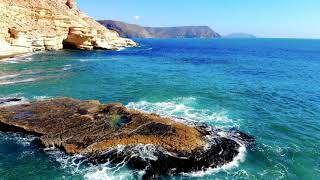
Just one kilometre from the town of Rodalquilar is El Playazo Beach, a delight for all visitors due to its refreshing waters, typical of this natural park.On the way to the beach, you can see the Alumbres Tower, a defensive fortress from the 16th century, installed to protect the mines from robbery and looting by pirates. It is the oldest construction in the area.
The Berbers pirates of the time committed their crimes when the alum was moved to the beach to be loaded onto ships, so this tower was erected on the way to the coast to monitor and store the mineral, as it was highly demanded in the Average Age for its economic value and utility to fix colours in fabrics.
The Berbers pirates of the time committed their crimes when the alum was moved to the beach to be loaded onto ships, so this tower was erected on the way to the coast to monitor and store the mineral, as it was highly demanded in the Average Age for its economic value and utility to fix colours in fabrics.
You can also visit the House of the Volcanoes and the remains of the old gold mines. In addition, a visit to the El Albardinal Botanical Garden, which has more than 9 hectares of land and constitutes a true paradise in the middle of the desert, is of special interest.
El Albardinal is the best example of the native plant ecosystem of the Iberian southeast, with palm trees, cacti and much more of the area's flora, in addition to threatened and endangered species.
Activities in the province of Almeria


Share Article
More Articles


